
Michelin runflat tires are increasingly standard equipment on a growing number of vehicles, especially among premium manufacturers. Identifying this type of tire on your car requires neither specific tools nor mechanic skills, but it does require knowing where to look and what to search for. Several markings coexist on the sidewall of a single tire, and confusing them can lead to costly replacement errors.
ZP and EMT markings on the sidewall: two Michelin symbols not to confuse
The sidewall of a Michelin runflat tire bears a specific symbol, engraved in the rubber just like the dimensions or speed index. The most common is ZP, for Zero Pressure. This marking indicates that the tire can support the weight of the vehicle even after a total loss of pressure, thanks to reinforced sidewalls.
A second symbol exists at Michelin: EMT, for Extended Mobility Tyre. It designates the same flat-running capability. Concluding that a Michelin tire is not runflat because it does not bear the ZP designation would be a mistake. The verification must cover both names.
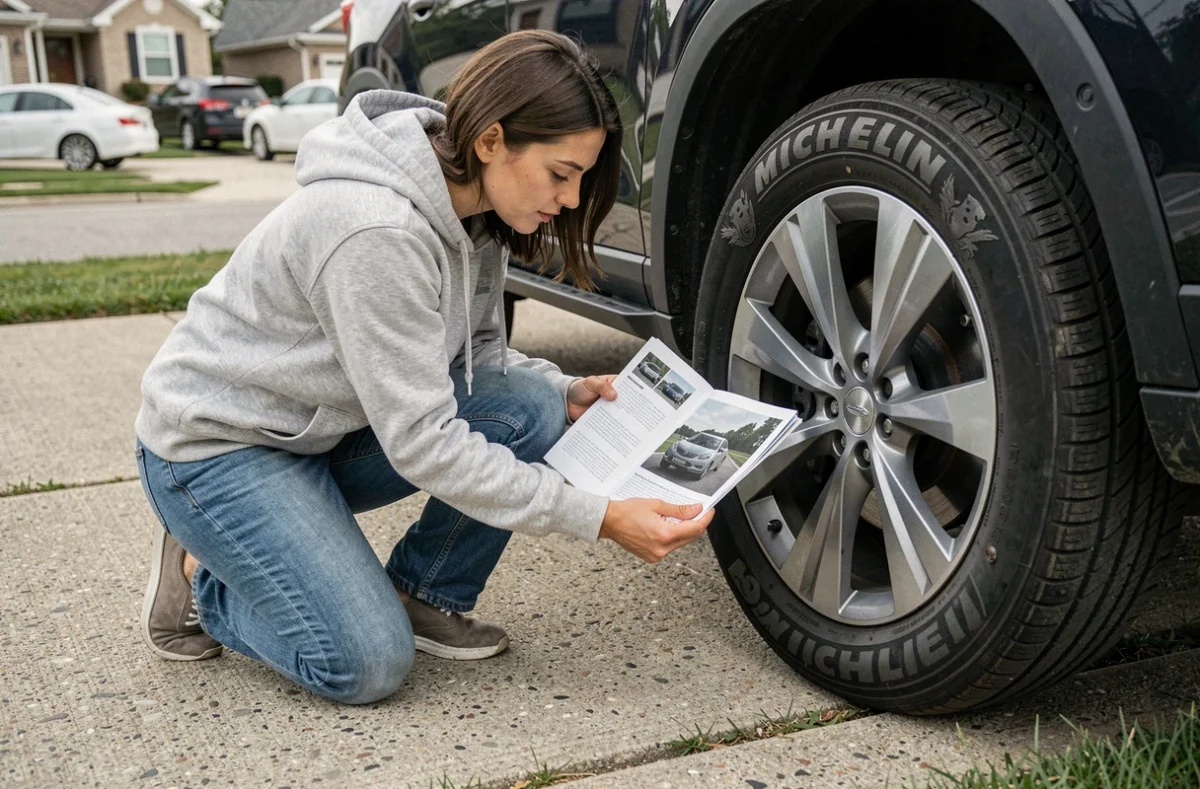
To locate these inscriptions, stand in front of the tire’s sidewall and look in the area between the model name (Pilot Sport, Primacy, etc.) and the dimensions. The characters are generally molded in relief, sometimes recessed. A damp cloth is enough to make a dirty marking readable. If you want to learn everything about Michelin runflat tires, a careful reading of the sidewall remains the most reliable starting point.
Generic runflat symbol or Michelin marking: avoid confusion between manufacturers
A common trap is to spot a runflat technology symbol on the sidewall and deduce that it is a Michelin tire. Each manufacturer uses its own code:
- RFT at Bridgestone and some Firestone setups
- SSR at Continental (Self Supporting Runflat)
- ROF at Goodyear and Dunlop
- ZP or EMT at Michelin
The symbol alone is not enough to identify the brand. It is necessary to cross-reference the runflat code with the manufacturer’s name, which is also inscribed on the sidewall, usually in large letters. A tire bearing the RFT designation is not a Michelin, even if it is fitted on a vehicle originally delivered with Michelin ZP tires.
This distinction has a direct impact at the time of replacement. Mounting a runflat tire from another brand on a rim designed for Michelin ZP does not pose a dimensional compatibility issue in itself, but the stiffness characteristics of the sidewalls vary from one manufacturer to another.
Manufacturer approval and runflat marking: two distinct pieces of information on the tire
Some Michelin tires bear, in addition to the ZP symbol, a manufacturer approval symbol. A star on the sidewall indicates, for example, BMW approval. A diamond refers to Renault. These markings mean that the tire has been developed or validated for a specific model.
A BMW star does not mean that the tire is runflat. The star certifies manufacturer validation of the tire’s performance for its vehicles. A BMW-approved Michelin tire can be runflat (with the ZP symbol as well) or not. Only the ZP or EMT marking confirms the flat-running technology.
Reading the sidewall of a tire thus involves decoding several layers of overlapping information: the brand, the range, the dimensions, the manufacturer approval, and the construction technology. The runflat marking occupies only one position among these data, which explains why it often goes unnoticed.
Absence of spare tire: a misleading clue to identify a Michelin runflat tire
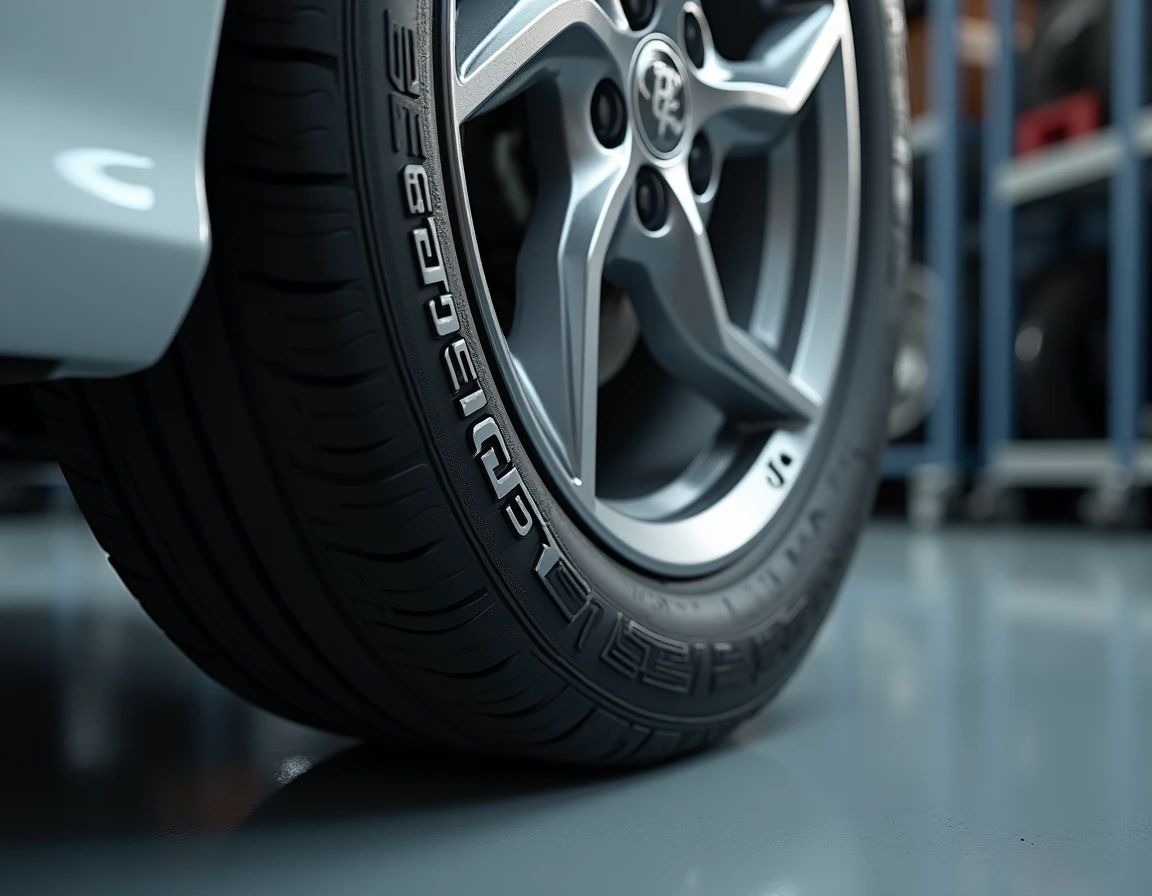
Many motorists discover they are driving on runflat tires the day they look for their spare tire in the trunk and cannot find it. Manufacturers that fit runflat tires as original equipment often eliminate the spare tire to save space and reduce weight.
The absence of a spare tire is a clue, not proof. Several vehicles sold without a spare tire are not equipped with runflats: they come with a temporary repair kit (puncture sealant and compressor). Conversely, some models retain a space-saver spare despite having original runflat tires.
To clear up any doubt, two additional checks are necessary:
- Inspect the sidewall of each mounted tire to spot the ZP or EMT symbol
- Consult the maintenance booklet or the pressure plate (often in the driver’s door frame), which mentions the recommended tire type
- Check for the presence of an active TPMS (Tire Pressure Monitoring System) on the dashboard, as vehicles equipped with runflats always have this feature
The case of partial replacement
A vehicle that left the factory with Michelin ZP tires may have been fitted with conventional tires by a previous owner. Checking all four sidewalls, and not just one tire, allows for spotting a non-compliant mixed setup. Runflat tires should not be mixed with standard tires on the same axle, as this can alter the vehicle’s dynamic behavior.
Identifying a Michelin runflat tire relies on reading the sidewall, not on the equipment in the trunk or the manufacturer’s badge. ZP and EMT are the only two Michelin markings that confirm flat-running technology. Any other clue, whether it is the absence of a spare tire or a homologation star, remains supplementary information that does not replace this direct verification.