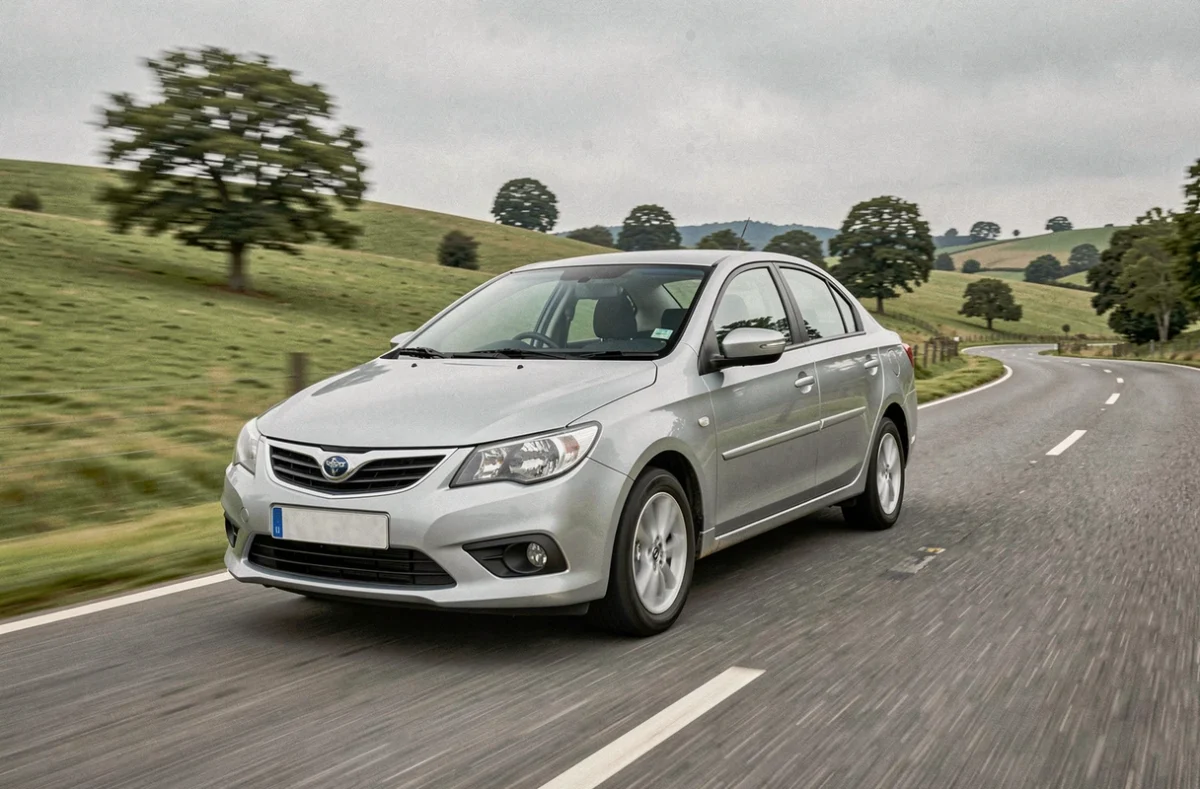
A city car with 90 horsepower and a small SUV with 90 horsepower do not reach the same top speed, do not accelerate the same way between 80 and 120 km/h, and do not consume the same amount on the highway. The power displayed on the registration document only tells part of the story of what actually happens between the engine and the road.
Vehicle weight and 90 horsepower: the factor that the technical sheet does not highlight
Let’s take two cars that both display exactly 90 hp. The first weighs around one ton, while the second approaches one and a half tons. On paper, the power is identical. On the road, the difference is immediately felt during acceleration, uphill, and during overtaking.
The power-to-weight ratio determines acceleration capability much more than the raw power figure. The heavier the car, the harder it is for the 90 horsepower to get it moving. This explains why a Dacia Sandero TCe GPL with 90 hp reaches a top speed of 175 km/h, while a compact SUV with the same power clearly caps well below that.
To explore the relationship between 90 horsepower and speed, we can model the theoretical maximum speed taking into account weight and aerodynamic drag, which yields very different results from one model to another.

Engine torque and RPM: why 90 hp does not produce the same thrust everywhere
The maximum power of 90 hp is only available at a specific RPM, often located quite high in the rev range. In everyday driving, we rarely operate at this RPM. What matters in daily use is the engine torque and the RPM range where it is accessible.
Torque available from low RPM
A 90 hp turbo gasoline engine can deliver its maximum torque as early as 1,500 or 2,000 rpm. The Sandero TCe 90 hp, for example, displays 140 Nm of torque. This early torque makes city acceleration and merging onto highways much more comfortable than an atmospheric engine of the same power that requires higher revs to deliver its force.
The role of the gearbox
The gearbox acts as a torque multiplier at the wheels. A short gear ratio amplifies thrust at the expense of top speed, while a long gear ratio does the opposite. Two 90 hp cars with different gear ratios do not provide the same driving sensations or acceleration figures.
With a short five-speed gearbox, acceleration between 60 and 90 km/h is brisk. With a long six-speed gearbox (designed to reduce fuel consumption on the highway), the engine runs at low RPM and acceleration requires downshifting.
Aerodynamic drag at high speed: the wall that 90 horsepower quickly encounters
Air resistance increases with the square of speed. In other words, doubling speed multiplies drag force by four. For a 90 hp engine, this physical reality sets a clear ceiling.
- Below 90 km/h, aerodynamic drag remains moderate, and 90 hp is more than enough to maintain speed, even on a slight incline.
- Between 110 and 130 km/h, drag absorbs an increasing share of available power. You can feel the engine working harder, and fuel consumption rises significantly.
- Beyond 150 km/h, almost all of the power is used to overcome air resistance, and each additional kilometer per hour costs proportionally much more energy.
The drag coefficient (Cx) and the frontal area of the vehicle determine how much this aerodynamic wall penalizes top speed. A low, streamlined sedan with 90 hp will go faster than a tall MPV with the same power, at equal weight.
90 horsepower on the road: real performance against French speed limits
In France, speed limits are capped at 130 km/h on highways in dry weather, 110 km/h on separated carriageway roads, 80 km/h on two-way roads without a separator, and 50 km/h in urban areas. Within this legal framework, 90 hp covers all common situations.
A 90 hp engine is sufficient to drive at the speeds allowed in France, including on highways. The question is not whether the car can reach 130 km/h (all current 90 hp cars can), but under what conditions it does so.
Acceleration and overtaking on national roads
The real test is the acceleration between 80 and 110 km/h to overtake a heavy vehicle on a two-lane road. A lightweight vehicle with 90 hp performs this maneuver without difficulty. A loaded SUV with four passengers and luggage requires more distance and anticipation.
Fuel consumption on the highway: the downside of high RPM
Maintaining 130 km/h with 90 hp forces the engine to run at a higher RPM than with a 130 or 150 hp engine, which has a power reserve. This extra RPM translates into higher fuel consumption than what the modest displacement would suggest. There is often a notable gap between the announced mixed consumption and the actual consumption on long highway trips.
The difference in consumption between a 90 hp engine running at high RPM on the highway and a more powerful engine cruising relaxed at the same speed varies depending on the type of engine (gasoline, GPL, diesel) and the weight of the vehicle. A 90 hp GPL engine like that of the Sandero offers a lower cost per kilometer, but its volumetric consumption remains higher than that of gasoline.
For the majority of drivers who drive in the city and on the road, 90 horsepower represents a functional compromise between sufficient performance and controlled operating costs. The determining factor is not raw power, but the combination of weight, torque, and aerodynamics specific to each model.