
When starting a weight loss program and looking into organic noni, the first challenge is not finding the product, but choosing between bottled juice, a powder to dilute, or capsules. Each form has its own storage, taste, and dosage constraints, and none is superior for weight loss goals. The choice mainly depends on the consistency one can maintain over several weeks.
Bioavailability of organic noni according to the galenic form
We often talk about the antioxidant benefits of the Morinda citrifolia fruit, but rarely about how the form of the product influences what we actually absorb. Liquid organic noni juice, especially when fermented using the traditional Polynesian method, retains more active compounds than powder or capsules. Fermentation enriches the juice with organic acids and enzymes that drying partially destroys.
Noni powder, obtained by dehydrating the fruit, concentrates certain nutrients (vitamin C, fiber) but loses a fraction of the volatile compounds and heat-sensitive polyphenols. Capsules standardize the dosage, making it easier to track, but their absorption depends on the excipient used by the manufacturer. Feedback on this point varies by brand and batch.
For a weight loss program, we primarily seek regular intake over several weeks. Liquid juice offers the best bioavailability, provided one can tolerate its pronounced bitterness. Detailed information available on Jus de Noni allows for comparison of the different forms available in the organic market.

Fermented or pasteurized noni juice: impact on a weight loss program
In the organic aisle, there are two types of bottled noni juice: fermented and pasteurized (sometimes called “pure juice”). The difference is not just a matter of taste.
Fermented juice undergoes several weeks of maturation. This process produces secondary metabolites, including organic acids, which contribute to digestion and fat metabolism according to preliminary laboratory data. Pasteurized juice, on the other hand, is heated to ensure its preservation. It is milder in taste, but pasteurization reduces the content of active enzymes.
In the context of a weight loss program, fermented juice seems more relevant nutritionally. Its very bitter taste remains the main drawback. It can be mixed with organic fruit juice (apple, grape) to soften the bitterness, but this adds natural sugars that need to be accounted for in the daily caloric balance.
What labels don’t always specify
Some products sold as “noni juice” are actually blends where noni represents a minor fraction. Checking the ingredient list is a step not to be overlooked. A certified organic product with the mention “pure noni juice” or “100% Morinda citrifolia” guarantees that you are consuming the fruit and not a diluted cocktail.
Organic noni capsules and powder: concrete limits for weight loss
Organic noni capsules are appealing because they eliminate the taste issue and simplify the dosage. You swallow two to three capsules a day with a glass of water, without worrying about refrigeration. For someone traveling or without access to a fridge during the day, this is a real advantage.
Noni powder, on the other hand, is mixed into a smoothie or yogurt. It provides additional fiber, which can contribute to satiety. However, the dosage of active principles remains less controllable than with pure juice, as the concentration varies depending on the drying process.
Here are the criteria to check before purchasing a dry form of organic noni:
- Organic certification (AB or Euroleaf) and the geographical origin of the fruit, ideally from Polynesia or Southeast Asia where Morinda citrifolia grows naturally
- The drying process: low-temperature drying better preserves polyphenols than rapid industrial drying
- The absence of additives, maltodextrin, or fillers in the capsules, which reduce the actual proportion of noni per dose
Organic noni and weight loss: what the available data really says
No quality clinical trial currently targets weight loss as the main criterion with noni. The few dozen small human trials published mainly focus on cholesterol, oxidation markers, or pain. The weight loss effect of noni remains an extrapolation from very indirect metabolic data.
In practice, noni can support a weight loss program by contributing to digestive comfort and providing antioxidants, but it does not replace a caloric deficit or regular physical activity. Rare reports of liver toxicity specifically concern concentrated liquid forms taken over long durations, which necessitates caution regarding the duration of the program.
Some guidelines for structuring a program:
- Prefer short programs of a few weeks rather than continuous intake over several months, respecting breaks
- Start with a reduced dose to assess digestive tolerance, especially with fermented juice
- Consult a healthcare professional if on medication, as noni can interact with certain hepatotoxic drugs
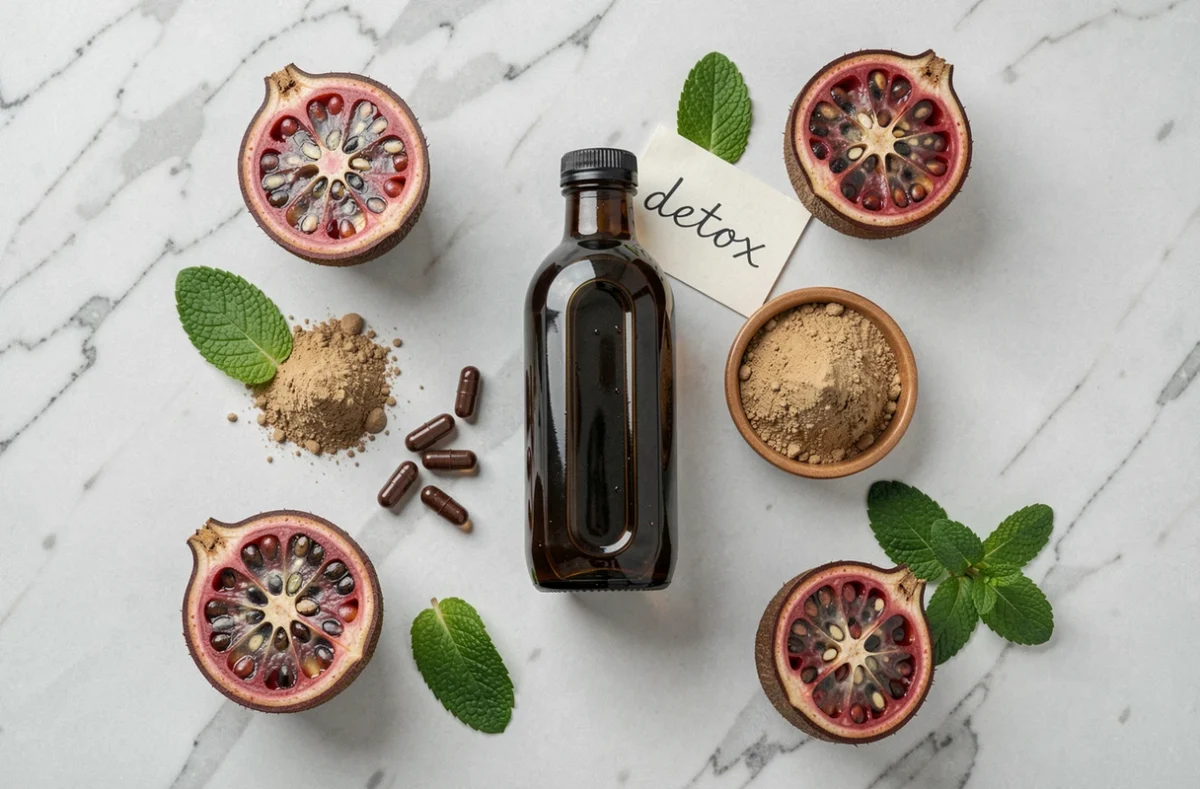
The choice between juice, capsules, or organic noni powder primarily depends on what one can maintain over time. Organic fermented juice offers the best nutritional richness, but its taste and storage complicate daily use. Capsules provide convenience without the same density of active compounds.
In any case, noni remains a dietary supplement and not a proven weight loss product: the consistency of intake and overall lifestyle matter much more than the chosen form.