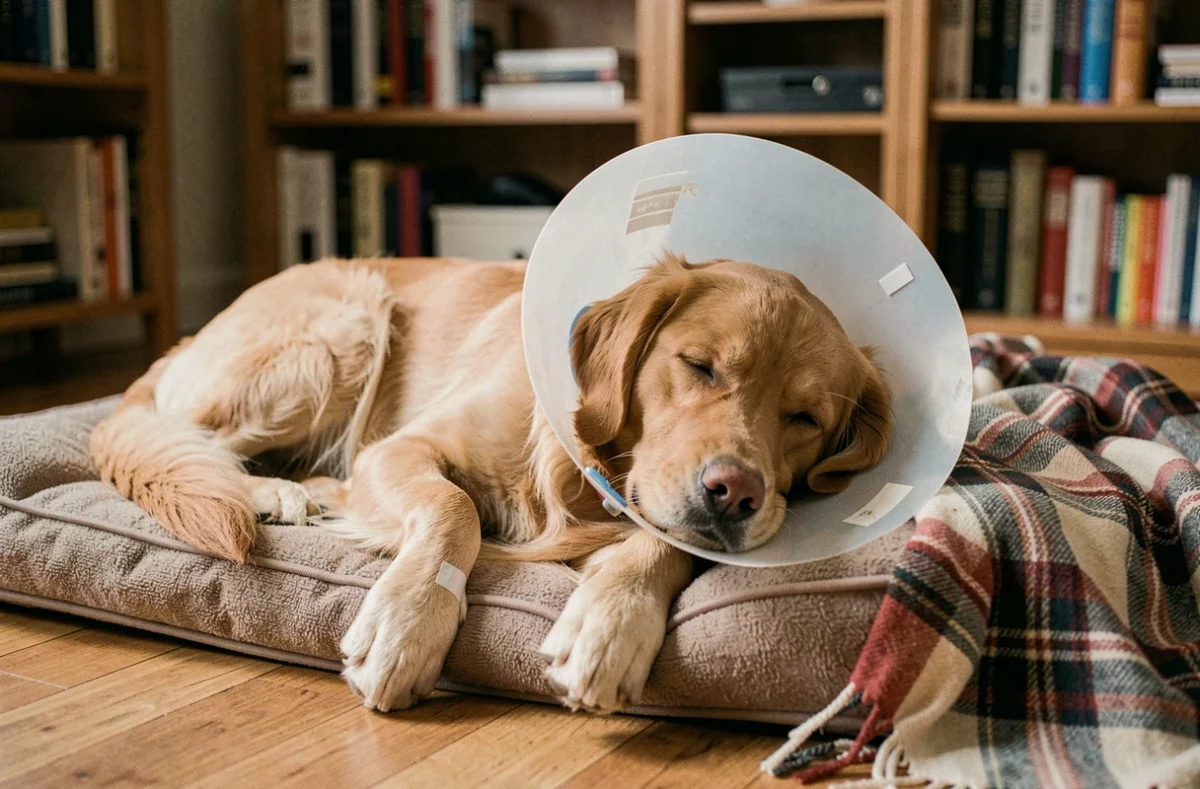
A dog wagging its tail the day after its sterilization gives the impression that everything is fine. It is allowed to trot in the garden, jump on the couch, and three days later the wound is oozing. This discrepancy between the animal’s apparent energy and the actual state of its healing is the primary cause of post-operative complications.
Understanding this discrepancy means understanding why rest after sterilization lasts much longer than the dog’s behavior suggests.
Why a fit dog remains fragile after surgery
Most dogs return to almost normal behavior within three to five days. Their appetite returns, drowsiness disappears, and the animal wants to move. One might think that recovery is over.
It is not. The complete healing of the incision takes 10 to 14 days, regardless of the external appearance of the wound. Beneath the skin, the deep tissues are still being repaired. A sudden effort (jumping, running, playing with another dog) can reopen the incision or cause a seroma, that pocket of fluid that forms under the suture.
Detailed information about rest after sterilization can be found on Boule de Poil, particularly regarding the differences in recovery between males and females.
This distinction is indeed crucial. A castration (removal of the testicles) is less invasive than an ovariectomy or an ovariohysterectomy, which involve opening the abdominal cavity. The duration of rest may vary depending on the type of procedure, but the minimum of 10 to 14 days of activity restriction applies in both cases.
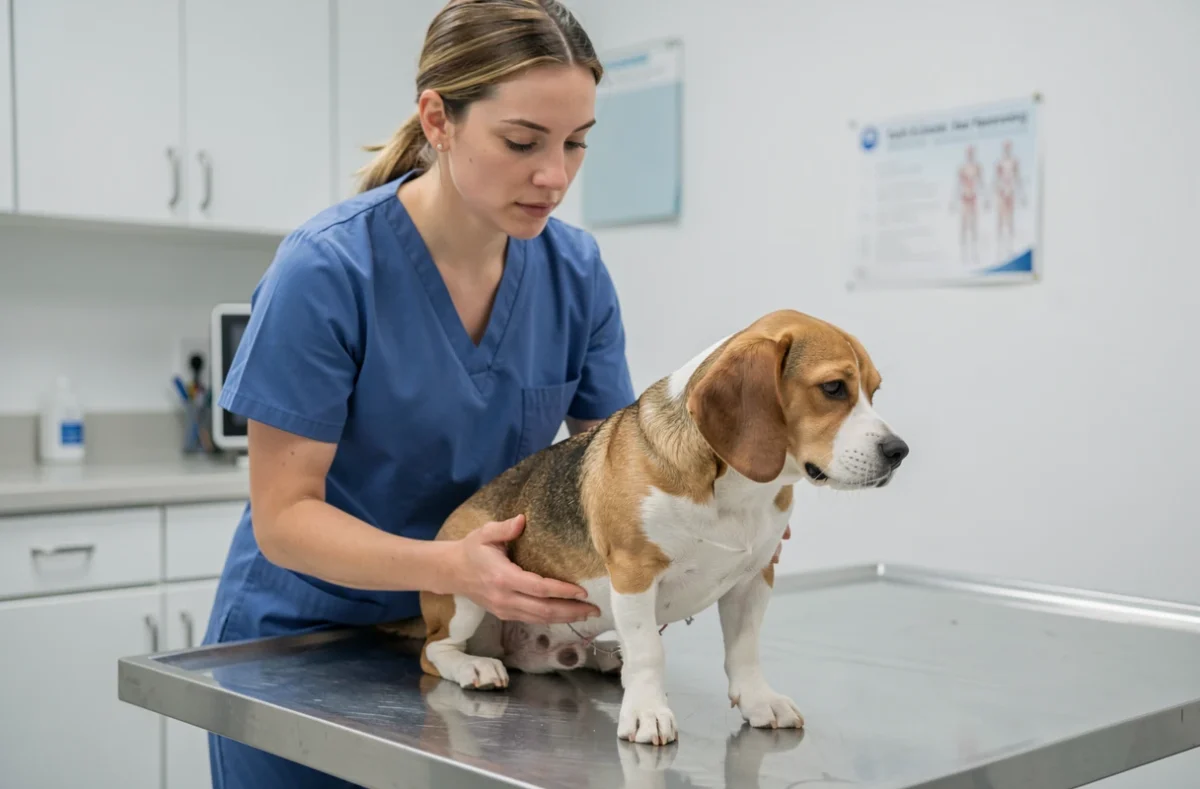
Activity restriction after sterilization: what it really means
Simply saying “rest” is not enough. For an owner living in an apartment with a 30 kg dog, the constraints are not the same as for a small dog in a single-story house. Here is what activity restriction entails during the entire healing period:
- Short hygienic outings, always on a leash, without allowing the dog to pull or speed up
- No stairs if possible, or carrying for small dogs and slow accompaniment for large ones
- No jumping: neither on the couch, nor in the car, nor over a low wall in the garden
- No playing with other animals, even those that appear calm (a simple paw on the belly is enough to irritate the wound)
For very active dogs, this period is the most difficult to manage. Some owners use an indoor pen or confine the animal to a quiet room. The dog’s boredom is preferable to a reopening of the wound.
Licking and Elizabethan collar: a point many overlook
A dog that licks its wound does not “clean” it. It introduces bacteria, softens the tissues, and risks tearing the stitches. Licking is one of the most common causes of post-operative complications.
The Elizabethan collar (the “cone”) must remain in place for the entire duration of healing, which is 14 full days. Not 10, not 12: 14. Even at night, even when we are present. A dog can reach its wound in just a few seconds of inattention.
Alternatives to the traditional collar
If the rigid collar prevents the dog from eating or sleeping, post-operative medical jackets cover the abdomen and protect the incision. They are better tolerated by some animals, particularly short-nosed breeds that struggle to wear the cone. The collar or jacket must cover the full 14 days, without exception.
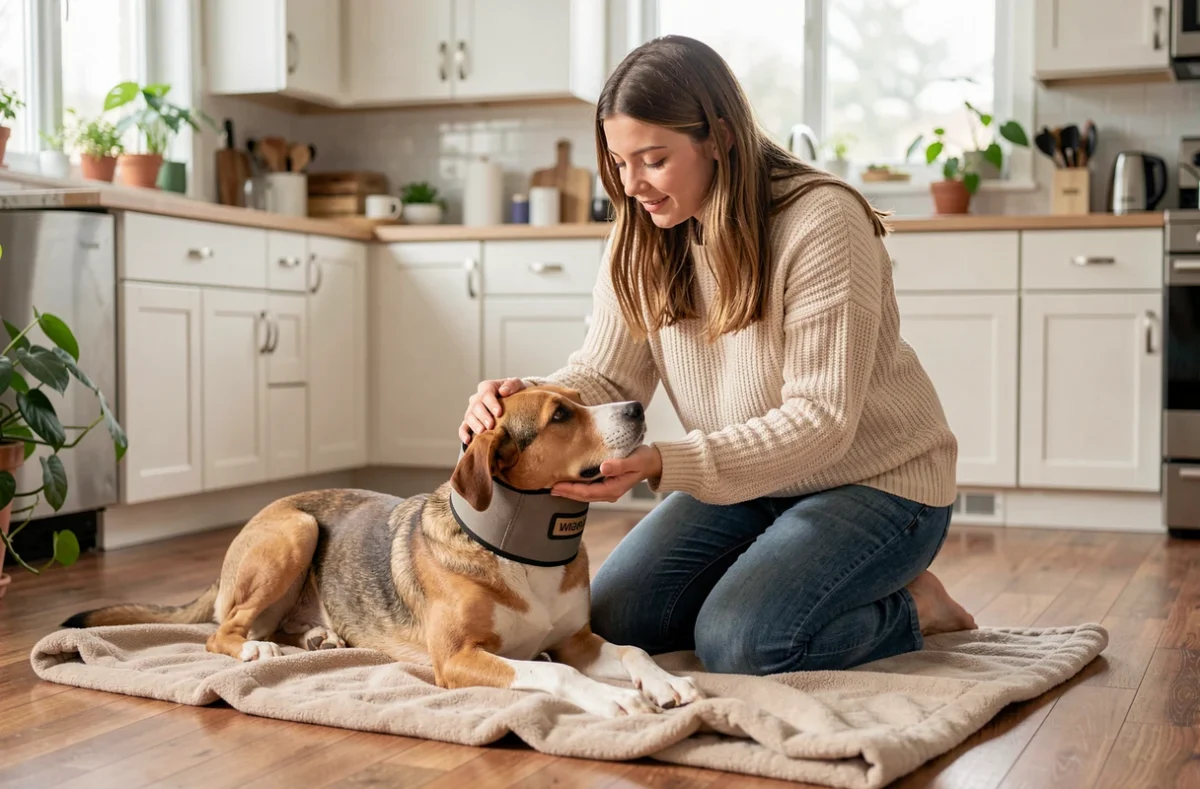
Wound monitoring: signals to check every day
The incision should be checked daily, preferably at the same time, to spot any abnormal changes. A wound that is healing normally is slightly pink in the first days, then gradually pales. Here are the signs that should raise concern:
- Redness extending beyond the suture area instead of decreasing
- Abnormal swelling or soft mass under the skin (possible seroma or abscess)
- Pus, yellowish liquid, or blood discharge in significant amounts
- Unusual odor at the wound site
- Dog refusing to eat or remaining lethargic beyond the second day
One often overlooked point: never apply disinfectant, alcohol, or ointment without veterinary prescription. These household products can delay healing instead of speeding it up. The wound should remain clean and dry, nothing more.
When to call the veterinarian
If any of the above signals appear, contact the clinic without waiting for the follow-up appointment. A seroma caught early often resolves on its own. Left unchecked, it can become infected and require surgical intervention.
Feeding and resuming activity after the recovery period
On the evening of the procedure, offer a light meal (half of the usual ration) to limit nausea related to anesthesia. The return to the normal ration should be gradual over two to three days.
After the veterinarian’s green light (usually at the 14-day check-up), resuming activity should be gradual. Increase walks by a few minutes each day. Free running and intense play should only resume after three to four weeks, depending on the animal’s recovery. Returns vary on this point, as a small dog often regains full mobility faster than a large dog that has undergone an ovariohysterectomy.
Sterilization also alters metabolism: caloric needs decrease. Adjusting the ration downwards or switching to food formulated for sterilized dogs prevents rapid weight gain in the weeks following the procedure.
True rest after sterilization is not about keeping your dog immobile for two weeks. It is about accepting that visible healing is not the same as actual healing, and calibrating each resumption based on the state of the wound rather than the animal’s energy.