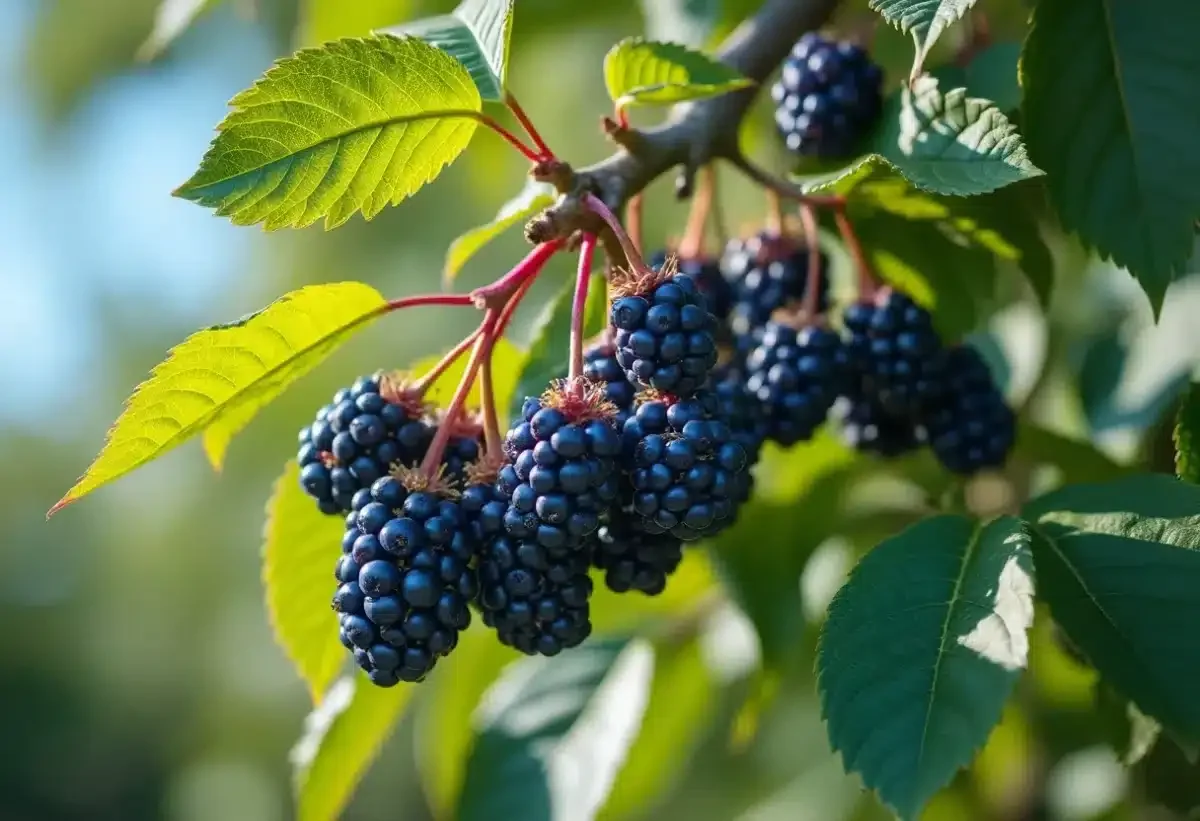
The plane tree mulberry, with its large leaves and juicy fruits, attracts many amateur and expert gardeners. To achieve a bountiful harvest, there are some valuable tips. It all starts with selecting varieties suited to the local climate, ensuring good development.
Regular soil maintenance plays a fundamental role. Good drainage, combined with nutrient inputs from compost, promotes growth. Pruning dead or diseased branches also helps ensure good air and light circulation. By following these tips, plane tree mulberries promise to be generous every season.
Key Factors for a Good Fruit Harvest from the Plane Tree Mulberry
To ensure a bountiful harvest of plane tree mulberry fruits, several essential elements must be mastered. The choice of variety is fundamental. The different varieties of plane tree mulberry, such as Morus Kagayamae, Morus platanifolia, or Morus bombycis, offer specific characteristics. Consider the climatic conditions of your region to choose the most suitable one.
Soil Conditions and Exposure
The soil plays a fundamental role. Prefer a light, neutral pH, well-drained soil. Normal moisture is recommended to promote growth. As for exposure, the plane tree mulberry thrives in direct sunlight. A sunny exposure ensures better fruiting.
Maintenance and Pruning
To optimize production, regular maintenance is necessary. Pruning should be done at the end of winter, severely, to encourage new vigorous growth. Pruning dead or diseased branches not only allows for better aeration but also better light distribution.
Protection Against Diseases
Disease resistance is another key factor. The plane tree mulberry can be sensitive to issues like rust, canker, or powdery mildew. Increased vigilance and preventive treatments can limit their impact.
- Soil: light, neutral pH, well-drained
- Exposure: sunny
- Pruning: severe, at the end of winter
- Diseases: rust, canker, powdery mildew
By following these recommendations, every gardener can hope for a generous and quality harvest.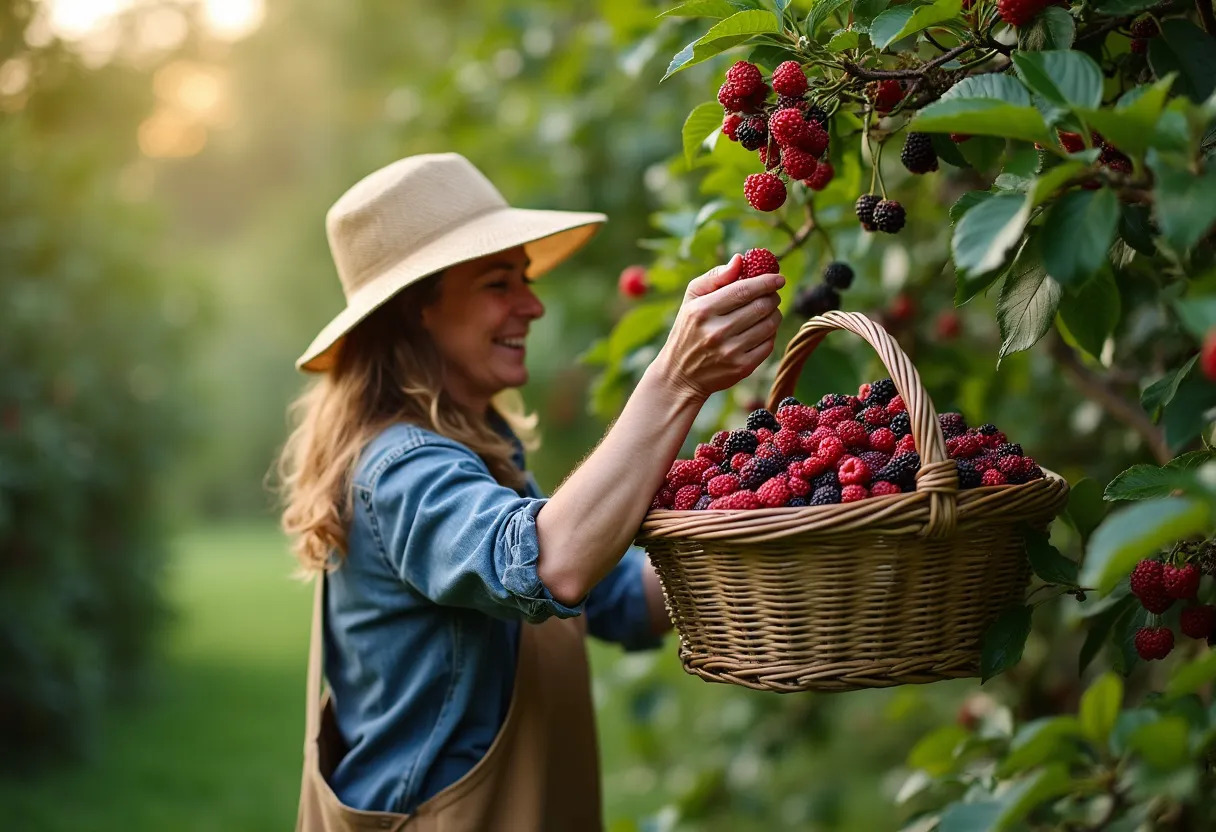
Cultural Practices and Maintenance to Optimize Fruit Production
To maximize fruit production from the plane tree mulberry, adopt precise cultural practices. Pruning is a fundamental step. It should be done at the end of winter, severely, to stimulate new growth. By removing dead or diseased branches, you improve light distribution and aeration, two essential factors for fruiting.
Propagation and Planting
The plane tree mulberry can be propagated by various methods:
- Layering: a technique involving burying a branch still attached to the mother plant to develop roots
- Cutting: taking a fragment of the plant to replant
- Grafting: a propagation method by inserting a scion onto a rootstock
These propagation techniques allow you to retain the characteristics of the chosen varieties, such as Morus Kagayamae or Morus platanifolia.
Sensitivity to Diseases
The plane tree mulberry is sensitive to certain diseases, notably rust, canker, and powdery mildew. Increased vigilance is necessary to detect these issues as soon as they appear. By using preventive treatments and maintaining good air circulation within the branches, you can limit the impact of these diseases and ensure fruitful production.
By applying these cultural practices and closely monitoring the health of your trees, you optimize the chances of obtaining a bountiful and quality harvest.