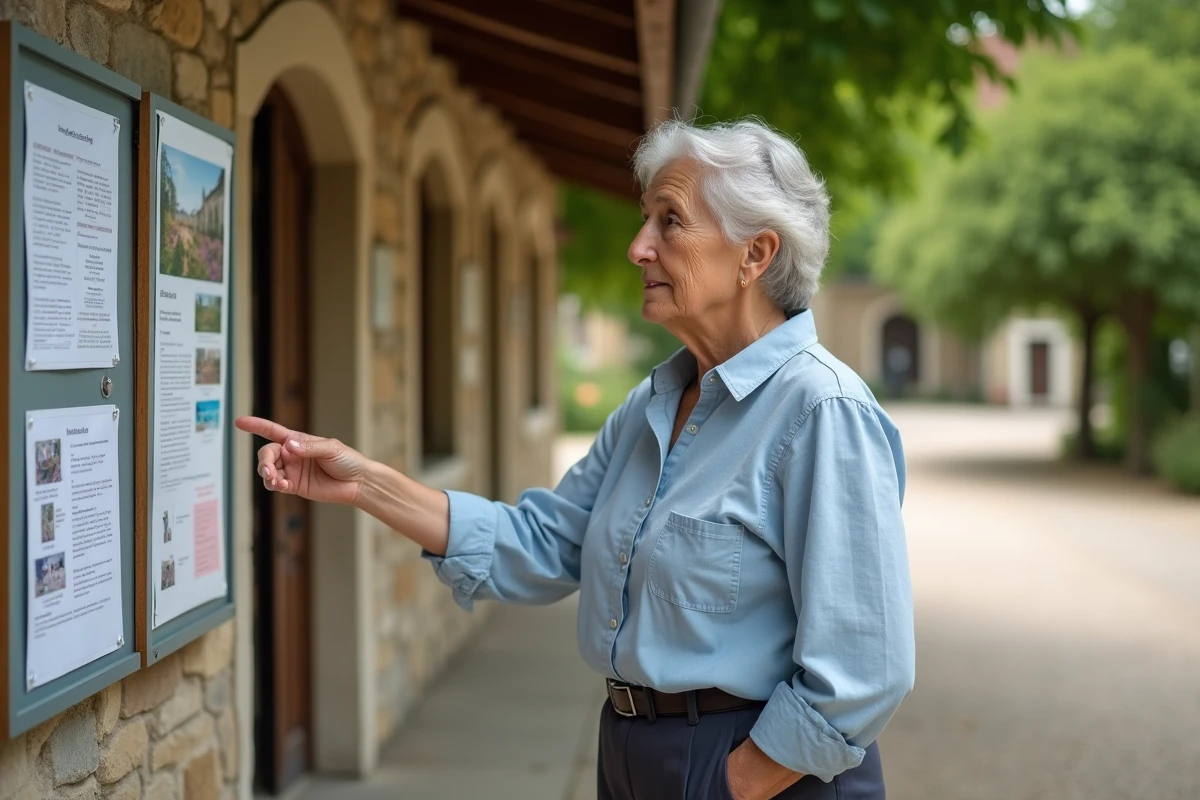
The Véron community of communes historically includes the municipalities of Avoine, Beaumont-en-Véron, Savigny-en-Véron, and Huismes, in the Indre-et-Loire department. Since its merger into the Chinon, Vienne, and Loire community of communes in 2014, this territory maintains a strong identity, driven by local initiatives that go beyond the traditional administrative framework.
Energy transition in the Véron: a pilot territory
Have you noticed those solar panels on the roofs of municipal buildings while crossing the Véron? It’s no coincidence. The Recovery and Ecological Transition Contract (CRTE) signed by the Chinon, Vienne, and Loire community of communes explicitly plans for the development of wood heating networks, energy renovation of public buildings, and support for photovoltaic self-consumption.
This program spans a timeline of actions planned until 2026-2027. Specifically, this means that the municipalities of the Véron serve as a local energy transition laboratory, with projects tested on a small scale before being extended to the entire intercommunal territory.
All practical information and procedures related to these projects are accessible on cc-veron.fr, which remains the main entry point for the residents of the territory.
Sustainable mobility between the villages of the Véron
One of the most concrete aspects of the CRTE concerns soft connections between Avoine, Beaumont-en-Véron, Savigny-en-Véron, and Huismes. The project plans to strengthen greenways and inter-village cycling routes, in conjunction with the Loire à Vélo.
Why this choice? Because dependence on individual cars remains the number one issue for commuting and school trips in rural areas. The CRTE aims to provide credible alternatives for these short trips, often less than a few kilometers.
For a resident of Savigny-en-Véron working in Avoine, a secure cycling route changes the daily routine. This type of infrastructure is not just for leisure: it is a genuine tool for local accessibility.
Biodiversity and green framework: beyond awareness
The Véron benefits from a unique natural heritage, between the Loire’s boires, the wetlands of the Val de Vienne, and the hedgerows. Since 2021, the community of communes has initiated a structured approach to green and blue frameworks that directly impacts this territory.
This goes beyond simple environmental communication. It is a multi-year program for the restoration of hedgerows and differentiated management of road edges. In other words, the roadside verges are no longer mowed in the same way everywhere: some sections are left in vegetation to support pollinators and small wildlife.
For residents, this approach translates into visible actions:
- Replanting of hedgerows on identified plots, with follow-up over several years to ensure the survival of the plants
- Differentiated management of municipal green spaces, which reduces mechanical interventions and promotes local biodiversity
- Protection of wetlands along the Vienne and Loire, with usage restrictions coordinated with agricultural operators

Social action and community life: the local fabric on a daily basis
A rural territory does not function without a solid social support network. The Véron relies on social action services, a social center, and local associations that structure the daily life of residents.
The social center plays a role as a welcome and participation space for all audiences, from young people to the elderly. It offers support actions, workshops, and collective times that help maintain connections in communities where local shops are becoming scarce.
Local associations complement this network. They carry out various initiatives:
- Sports and cultural activities accessible to young people in the territory, often in partnership with neighboring municipalities
- Solidarity and mutual aid actions, such as informal transport networks or occasional food distributions
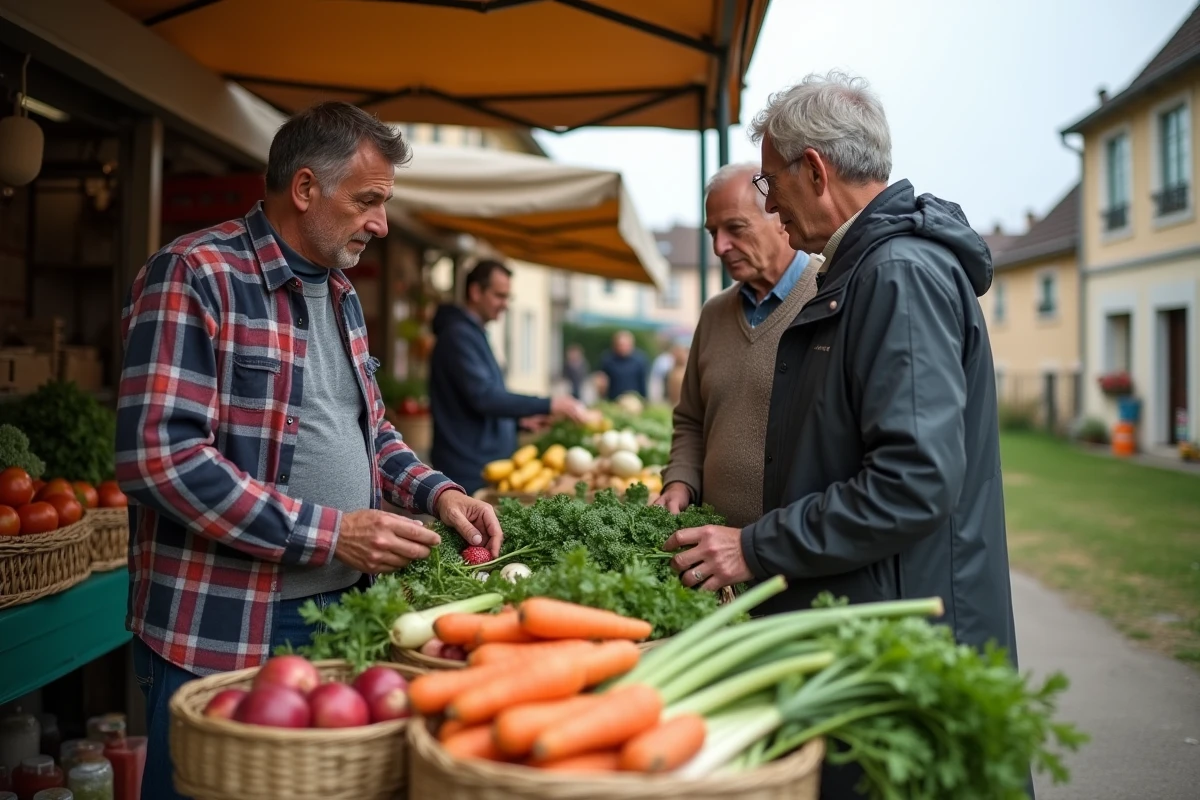
- Festive events and local markets that enliven life in the Véron and attract an audience beyond municipal boundaries
The CCAS (Centre Communal d’Action Sociale) of each municipality remains the first point of contact for residents facing difficulties. Social support primarily goes through this local service, before being referred to intercommunal services if necessary.
Resident participation and local governance
The community of communes operates with a community council and a community bureau that meets several times a month. This structure, common to all intercommunalities, takes on a particular dimension in a territory the size of the Véron, where elected officials know each other and where decisions have a direct impact on daily life.
Resident participation is not limited to elections. CRTE projects, for example, have involved local consultations. Each municipality retains a voice in intercommunal decisions, allowing priorities to be adapted to on-the-ground realities, whether it concerns a cycling path or a hedgerow to be replanted.
This model of proximity governance, where local public service remains clear to residents, constitutes the main strength of a territory like the Véron. Projects may progress more slowly than in a metropolitan area, but they are more aligned with the real needs of the people who live there.