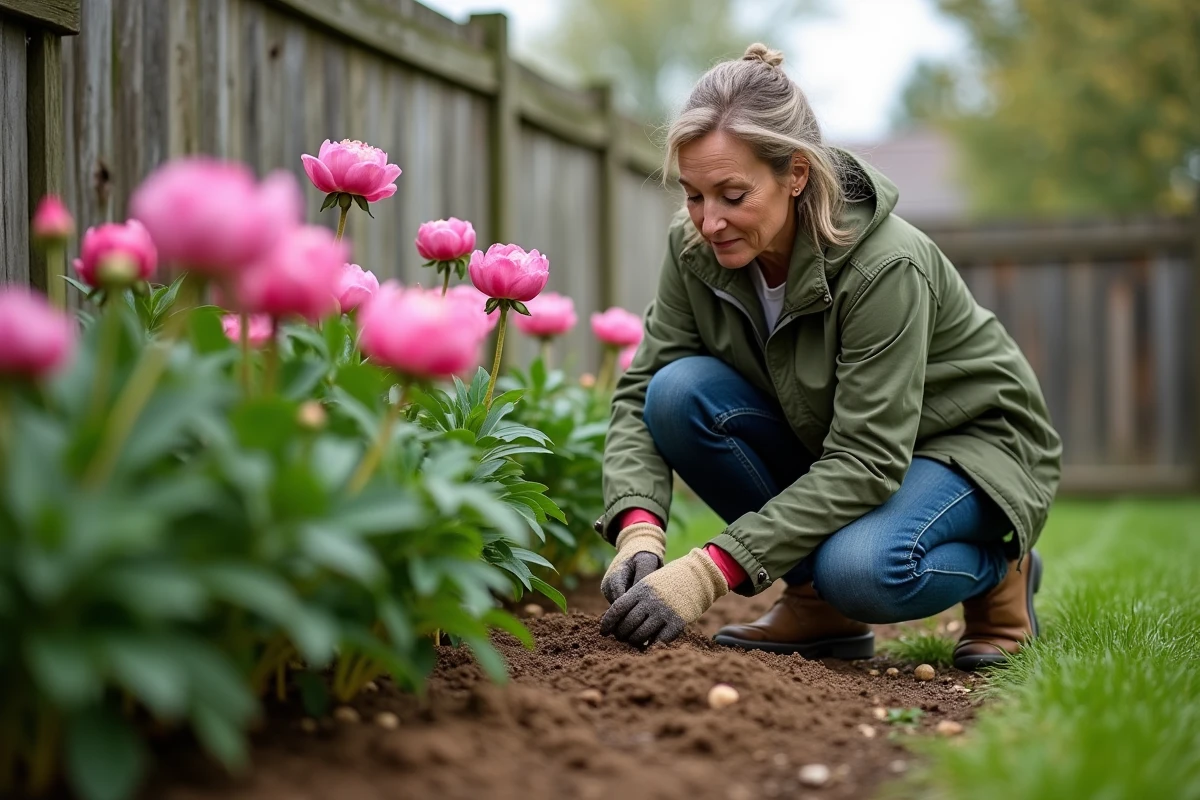
A bag of Lidl horse manure placed next to a peony bed is more than just a gardener’s gesture: it’s the start of a silent, decisive transformation in the vitality of your flowers.
Why Lidl horse manure makes a difference for peony blooming
The success of peonies, particularly paeonia lactiflora, relies on a living, fertile, and well-structured soil. Experienced gardeners observe that the addition of composted horse manure transforms the soil texture, stimulates underground life, and attracts earthworms. These invisible workers decompose organic matter, aerate the soil, and enrich it deeply. By choosing Lidl horse manure for peonies, you are investing in an organic resource that consistently delivers all the elements the plant needs.
Here are the main nutrients provided by this manure, which benefit peonies throughout their growth:
- nitrogen
- potassium
- calcium
- magnesium
The roots absorb this nutritional balance, supporting the formation of generous flower buds. This already-matured manure is unlikely to burn young shoots and gradually releases its benefits. The ‘Sarah Bernhardt’ or ‘Karl Rosenfield’ then display robust flowers and vibrant foliage. The soil, now more pliable, retains moisture better without ever becoming compact, while ensuring effective drainage.
An additional application of compost or organic fertilizer often reinforces this setup, providing peonies with appropriate nourishment throughout the seasons. This Lidl horse manure, offered at an accessible price, caters to both enthusiasts and professionals. It respects soil health, encourages the plant’s natural cycle, and fits perfectly into an agroecological approach that is mindful of garden balance.
Should you mix or apply on the surface? The best application methods for your peonies
The versatility of Lidl horse manure is appealing, but its use requires some precautions. During planting, it is recommended to opt for already composted or matured manure:
- Gently incorporate it into the soil, about twenty centimeters deep.
- This action nourishes the soil, improves its texture, encourages earthworm activity, and creates an ideal environment for peony roots.
For regular maintenance, surface spreading remains the most commonly used method, best applied in late autumn or early spring. Spread a layer of 3 to 5 cm around the plants, avoiding contact with the crown. This organic mulch protects peonies from temperature fluctuations, limits evaporation, and nourishes soil life. With each rain, essential elements slowly descend to the roots.
Here are the practices to remember according to the season:
- In autumn: spread fresh manure to decompose over the winter.
- In spring: prefer matured manure, immediately assimilable by the plant.
Be sure to avoid any direct contact with young shoots to prevent burning. This method strengthens soil structure and supports vigorous blooming. A simple application of well-matured horse manure, combined with a bit of patience, is enough to transform each bed into a renewed promise of colors and fragrances.
Practical tips and tricks for vibrant peonies throughout the season
Achieving abundant peonies requires preparation well before the first flower. Regular mulching with composted horse manure protects the roots, limits water loss, maintains soil freshness, and curbs the proliferation of unwanted weeds. A few centimeters of mulch make all the difference, especially during dry spring periods.
Watering should be moderate: not too much, not too little. Water at the base to preserve the foliage, thus reducing the risk of fungal diseases such as botrytis or powdery mildew, which are common on Paeonia lactiflora. When planting, space the plants adequately to ensure good air circulation. This will limit stagnant moisture and the spread of fungi.
Monitoring for pests is necessary throughout the season. Aphids, slugs, and snails are eager to invade tender young shoots. Remove them by hand or try gentle solutions like black soap. Regularly inspect the stems and the underside of the leaves to act at the first signs of invasion.
After blooming, carefully prune the peonies by removing damaged or diseased stems. This simple action stimulates the plant’s vigor and prepares for another exceptional season. An annual application of horse manure, rich in nitrogen, potassium, calcium, and magnesium, maintains earthworm activity and keeps the soil alive.
With regular attention, soil rich in organic matter, and renewed mulching, the peony produces sumptuous flowers each year. The result? A bed that captures the eye, season after season, transforming the garden into a living canvas.